

The Abijah Beach Tavern: A Landmark at the Heart of Early Cheshire


By Richard "Reggie" Smith Research/Editor Creative Commons Attribution (CC BY) 4.0
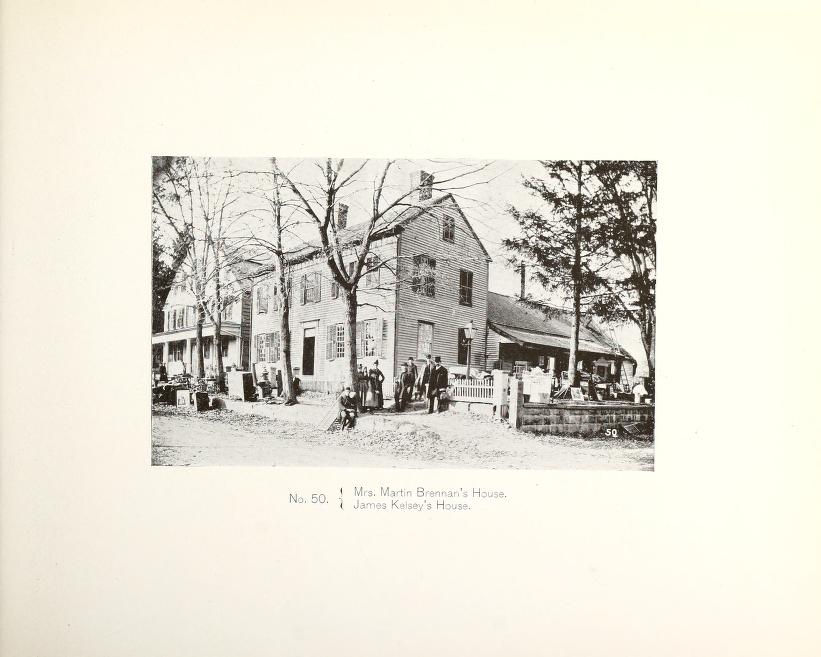
For more than two centuries, one building along South Main Street has quietly witnessed the evolution of Cheshire from a rural New England village into the thriving community it is today. The Abijah Beach Tavern, generally accepted to have been constructed in 1814, stands just south of the Cheshire Town Green and remains one of the town's most historically significant surviving buildings.
While visitors today may simply admire its elegant Federal architecture, the tavern once served as the social, political, commercial, and transportation hub of early nineteenth-century Cheshire. Before there was a town hall, before railroads connected communities, and before automobiles transformed travel, the Beach Tavern was where much of Cheshire's public life unfolded.
A Center of Community Life

The tavern was built by Abijah Beach, a prominent Cheshire resident whose family played an important role in the town's civic and commercial development. During the early 1800s, taverns were far more than places to eat or obtain lodging. They functioned as community gathering places where residents exchanged news, conducted business, attended public meetings, and welcomed travelers moving between New Haven and Hartford.
The Beach Tavern quickly became one of Cheshire's principal public buildings.
Historical accounts describe the property serving multiple roles simultaneously:
Tavern
Inn
General store
Stagecoach stop
Meeting place
Courtroom
Prior to the construction of Cheshire's Town Hall in 1867, many official town meetings and local court proceedings were held inside the tavern. Decisions that shaped the young community were often debated within its walls.
Its location adjacent to the Town Green made it a natural gathering place for both residents and visitors alike.
More Than a Tavern
Unlike many early New England taverns, the Abijah Beach Tavern contained a remarkably large third-floor ballroom.
This spacious hall became one of Cheshire's premier public assembly rooms.
Throughout the early nineteenth century it hosted:
Public dances
Musical performances
Singing schools
Community exhibitions
Court sessions
Civic meetings
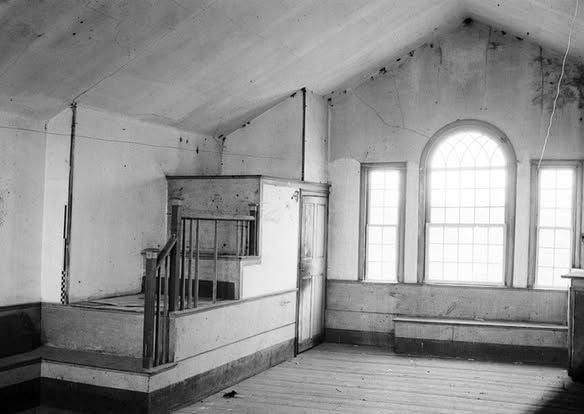
One particularly interesting feature survives today—a raised musicians' platform overlooking the ballroom. This small orchestra pit once accommodated musicians providing entertainment for dances and public celebrations.
The ballroom also reflects how versatile early American public buildings needed to be. A single room might host a dance one evening, a town meeting the next morning, and judicial proceedings later that same week.
Connections to Early Cheshire Commerce
The tavern's northern section incorporated an earlier commercial building that had originally operated as the store of merchant Benoni Hotchkiss. After the tavern was completed, the store continued serving Cheshire residents under several merchants, including General Andrew Hull, Colonel Rufus Hitchcock, and Amos Baldwin.
The combination of lodging, retail business, and public meeting space made the property one of the busiest locations in town.
Travelers arriving by stagecoach could purchase supplies, secure overnight accommodations, conduct business, and socialize without leaving the premises.
A Home for Civic Organizations
Historical records reveal that the building also played an important role in the development of local organizations.
From approximately 1808, members of the local Masonic Lodge held meetings in the third-floor hall for several years.
Later, before Cheshire's Roman Catholic community constructed its own church building, Catholic worship services were also conducted in the ballroom.
This adaptability reflects an era when public buildings often served many different purposes depending upon the needs of the community.
The Benjamin Franklin Inn
During part of its long history, the property operated under the name Benjamin Franklin Inn.
Although ownership and business operations changed over time, the building continued welcoming travelers and serving local residents until the mid-nineteenth century.
In 1852, its commercial life largely came to an end when it was converted into a private residence.
Fortunately, this transition helped preserve much of the original structure.
Remarkable Architectural Survivals
Although adapted as a residence, the building retains numerous features dating back to its tavern days.
Among the most notable are:
The expansive third-floor ballroom
The original musicians' platform overlooking the dance floor
Original wooden tavern shelving on the first floor
A traditional brick beehive oven in the basement
Classic Federal-style architectural details
These surviving elements provide a rare glimpse into everyday life in early nineteenth-century Connecticut.
Federal architecture, popular between approximately 1780 and 1830, emphasized symmetry, restrained ornamentation, elegant proportions, and refined craftsmanship. The Beach Tavern remains one of Cheshire's finest surviving examples of that architectural style.
Dr. Lois Armbruster's Home and Office

During the twentieth century, another chapter of Cheshire history unfolded within the old tavern.
The building became both the residence and medical office of Dr. Lois (Deming) Armbruster, one of Cheshire's most respected physicians.
Born in 1920, Dr. Armbruster graduated from Cheshire's Humiston School before earning her undergraduate degree from Cornell University and her medical degree from the Women's Medical College of Pennsylvania.
After completing her residency at Waterbury Hospital, she opened her Cheshire medical practice in 1951 at 137 South Main Street—inside the former Beach Tavern.
For more than two decades she cared for generations of Cheshire families before retiring from private practice in 1972. She later continued working in the Emergency Department at Waterbury Hospital until her retirement in 1985.
Beyond medicine, Dr. Armbruster served as physician for both the Cheshire Police and Fire Departments and participated on numerous public health committees. Many longtime residents still remember visiting her office inside the historic building.
She lived in Cheshire for 65 years before moving to Vermont later in life.
Resolving the Building's Construction Date
One interesting historical question concerns exactly when the tavern was built.
Some older references suggest a construction date around 1750, while more recent architectural research and preservation sources identify 1814 as the correct date.
Architectural historians generally favor the 1814 date because the building clearly exhibits characteristics of Federal architecture, a style that became popular after the American Revolution and reached its height during the early nineteenth century.
It is possible that confusion arose because portions of earlier structures or materials may have been incorporated into the present building, a common practice during that period.
Examining One of the Ballroom's Most Intriguing Features
Among the surviving features of the third-floor ballroom is a curious wooden structure visible along one side of the room. At first glance, it appears unusual—almost resembling a raised platform with an oddly angled railing. For years, visitors have speculated about its original purpose.
Local researcher Jim Parys has offered an architectural interpretation that provides a practical explanation for the feature.
According to Parys, the structure is likely not a stage, pulpit, or ceremonial platform, but rather the upper landing of the original staircase leading into the ballroom.
"The door beside it is the clue," Parys explains. "In early nineteenth-century buildings, stairways often entered directly into large public rooms rather than enclosed hallways. The raised wooden structure would have framed the stair opening and provided a safe landing where people could step from the staircase onto the ballroom floor."
Parys notes that the railing itself appears functional rather than decorative. Instead of serving as ornamental woodwork, it would have acted as a protective handrail, preventing visitors from accidentally stepping into the stairwell while also guiding people ascending or descending the stairs.
He also points to the boxed-in woodwork surrounding the feature, suggesting it likely enclosed the head of the staircase and separated the circulation space from the rest of the ballroom. Rather than appearing as a later addition, the construction seems integrated into the building's original architecture.
If this interpretation is correct, the feature represents an excellent example of the practical design found in many early nineteenth-century public buildings. Staircases often opened directly into assembly halls, where space was used efficiently and architectural ornamentation was secondary to function.
Although no surviving architectural drawings have yet been located to definitively confirm the feature's purpose, Parys' analysis offers a logical explanation that is consistent with period construction methods and with the layout commonly found in Federal-era taverns and meeting halls.
Whether viewed as an architectural curiosity or as an overlooked piece of nineteenth-century craftsmanship, the structure serves as another reminder that every corner of the Abijah Beach Tavern tells part of Cheshire's story—and that even seemingly ordinary details can inspire fresh historical investigation.
A Living Piece of Cheshire History
Today the Abijah Beach Tavern stands as one of Cheshire's best-preserved reminders of the town's early years.
Within its walls residents have debated town affairs, attended court, celebrated weddings and dances, worshipped, shopped, welcomed travelers, received medical care, and simply gathered with neighbors.
Few buildings in Cheshire have served so many different purposes or touched so many generations.
As development continues throughout the community, historic landmarks like the Abijah Beach Tavern offer an important connection to Cheshire's past. They remind residents that today's quiet streets were once bustling stagecoach routes and that many of the institutions now taken for granted first operated from multipurpose buildings like this one.
More than 210 years after its construction, the Abijah Beach Tavern remains not merely an old building, but a tangible record of Cheshire's civic, commercial, and social history—one that continues to enrich the character of the town today.


Comments